
Beware of Fake Domain Renewal Emails: “IDS Ireland”
Scam emails are getting increasingly sophisticated, and one of the most common — and successful — types targets business owners with fake domain renewal notices.
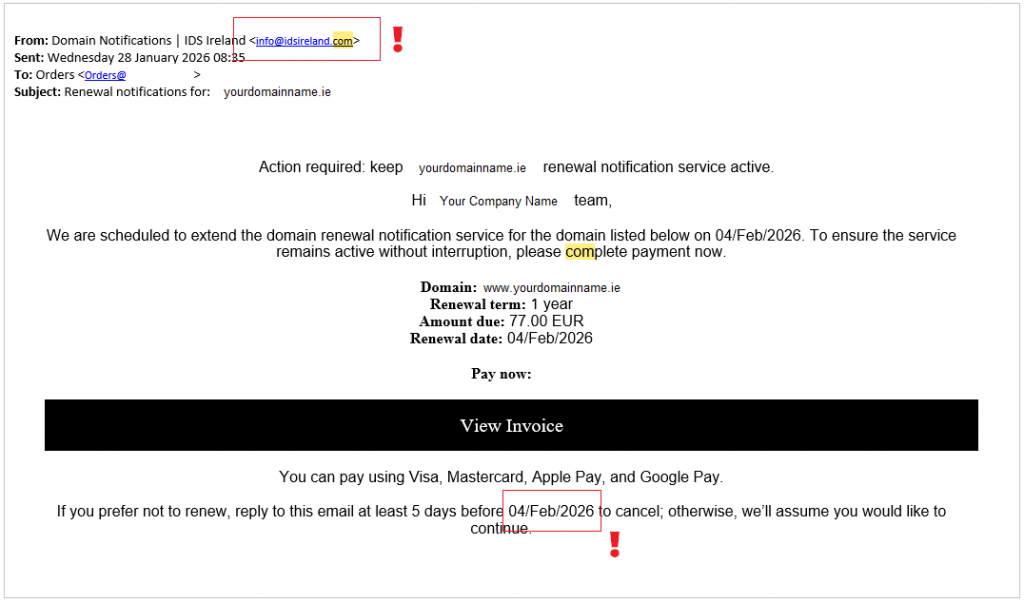
Recently, we came across an email claiming to be from “Domain Notifications | IDS Ireland”, warning that a company’s website domain was about to expire and urging immediate payment. At first glance, it looked legitimate. On closer inspection, it was anything but.
What the Scam Email Looks Like
The email appears professional and includes:
- A recognisable business name and address
- A specific domain name (e.g. www.yourdomain.com)
- An exact renewal date
- A modest fee (€77 — low enough not to raise alarms)
- Familiar payment options like Visa, Mastercard, Apple Pay, and Google Pay
- A warning that the service will auto-renew unless cancelled
It even includes legal-sounding disclaimers and a polite sign-off from a named “representative”.
The Key Red Flags 🚩
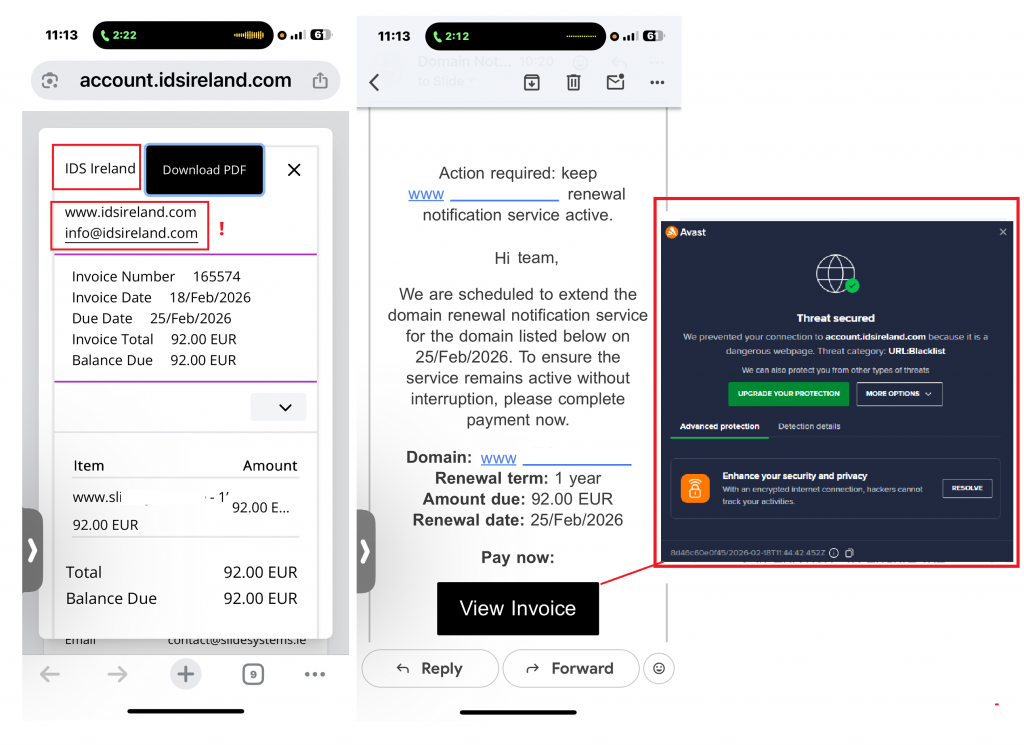
IDS Ireland (sender) is not a hosting company.
IDS Ireland does not manage your domain.
Do not pay any invoice until you check with us.
Verify your domain status independently at https://checkdomain.ie/
What Happens If You Pay?
If you pay:
- Your domain does not get renewed
- You receive no meaningful service
- You’ve confirmed your business is a “live target” for future scams
In short: you lose money and invite more trouble.
How to Protect Yourself
Before paying any domain-related invoice:
- Check who your real registrar is (e.g. Web World )
- Log in directly to your registrar’s website — never click email links
- Be suspicious of urgency
- Read the fine print
- Ask your IT provider or web developer if you’re unsure
If the email didn’t come from your actual registrar, delete it.
What to Do If You Receive One of These Emails
- Do not click any links
- Do not reply
- Do not pay
- Mark it as spam
- Warn colleagues (especially finance or admin staff)
Final Thoughts
Domain renewal scams like this are becoming more common and increasingly convincing — but they are not legitimate invoices. Scammers often use real WHOIS data (domain names and contact details from public sources) to make their messages look truthful and relevant, but that doesn’t mean they actually manage or control your domain.
If you receive a notice about your domain:
- Always check directly with your actual registrar — log into your account instead of clicking links in the email.
- Never pay an invoice from a company you don’t recognise. Your domain can only be renewed through the registrar you originally used.
- Scammers rely on urgency and fear to get you to act without verifying the details — take a moment to double‑check first.
In short: stop, verify, and don’t pay until you are absolutely sure the request is genuine. If in doubt, contact your registrar or web support team before taking any action. If you have any questions please contact: support@webworld.ie